John Thomas in The New York Sun: Gaza’s Camps Need Order, Security, and Accountability
Washington, D.C., October 3, 2026 — Rising reports of gender-based violence among displaced women and girls in Gaza are raising urgent questions about camp security, aid distribution, and accountability, according to a new New York Sun report by Hollie McKay. Nestpoint Managing Director John Thomas weighed in on how the data should be read and what practical steps could reduce the daily risks documented inside the camps.
The report cites findings from the United Nations Population Fund showing that reported gender-based violence rose 60 percent in the first six months of 2026, while reports of sexual violence rose 61 percent in the second quarter. The article also notes that the data draws from cases handled by partner organizations and interviews with displaced women in Gaza City and Khan Yunis.
Thomas cautioned that the numbers should be read carefully.
“Treat them as reported cases, not a census of what is actually happening,” Thomas told The New York Sun. “UNFPA is measuring what reached service providers, not the true rate of violence.”
He applied the same caution to the reported increase in sexual violence, noting that a rise in reports can reflect several different dynamics at once.
“A 61 percent jump in a category that still makes up only a few percent of all reported gender-based violence incidents can reflect more clinics, more awareness, and more confidential channels as easily as a sudden explosion in attacks,” Thomas said.
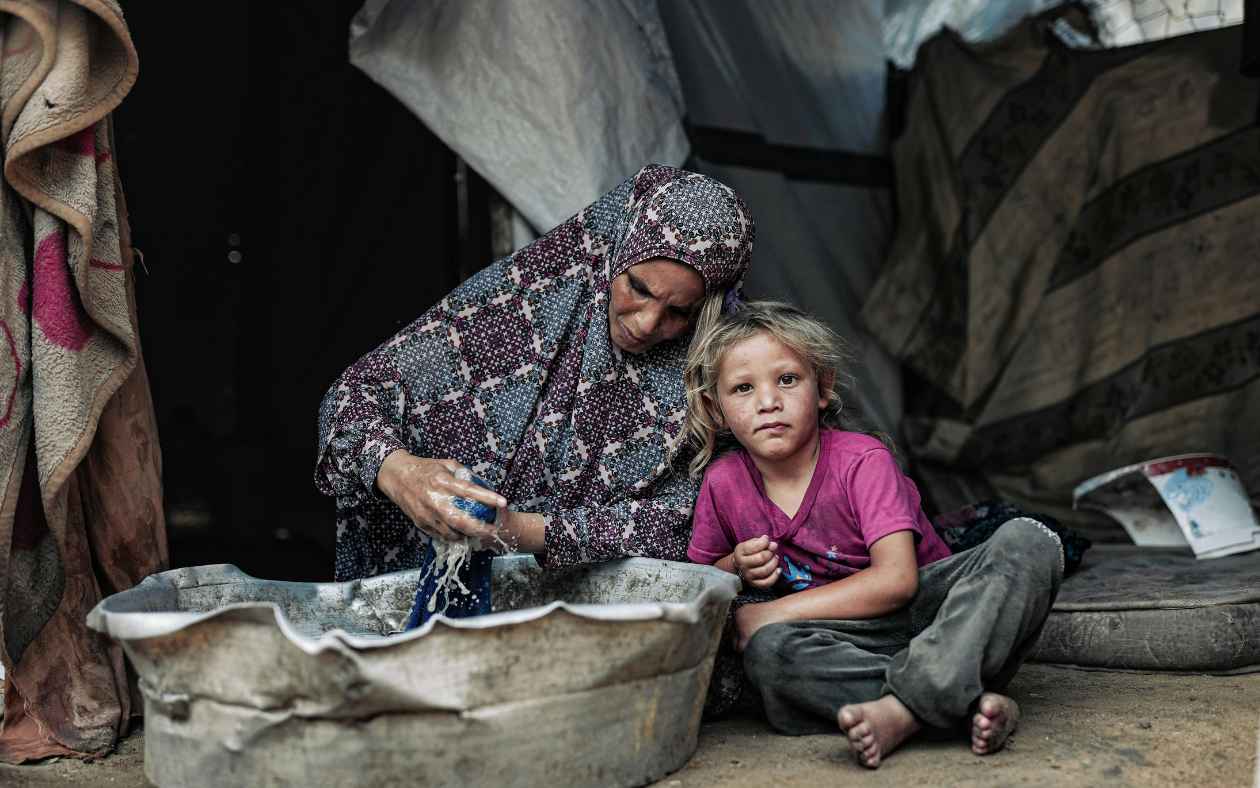
Still, Thomas emphasized that the conditions described in the camps are deeply concerning. According to the report, women described a lack of doors and privacy, poorly lit restrooms, limited single-sex facilities, and displacement sites where aid shortages can make women and girls more vulnerable to exploitation.
“Overcrowding, darkness, and dependence,” Thomas said. “When more than a million people are packed into informal sites with no lighting, no locks on toilets, no privacy, and no functioning police, predation becomes easy. Aid shortages then turn food, tents, and water into leverage.”
The article also examines gaps in the public record around accountability. While the report describes family violence, camp conditions, aid-related exploitation, and allegations involving armed actors, it also notes that women may be reluctant to report abuse by Palestinian armed groups. Thomas said that limitation matters when assessing the full picture.
“The public record tilts toward family violence, camp managers, and aid-related exploitation, which are real, while leaving Hamas and other armed factions in the shadows,” Thomas said.
For Thomas, the immediate priority is not only more funding or public statements, but practical measures that reduce risk inside the camps and limit opportunities for exploitation.
“Secure the camps and get aid out of the hands of predators,” Thomas said. “Lighting, locks, female site management, and real consequences for exploitation would reduce the daily risks UNFPA actually documented.”
He added that protection ultimately depends on restoring order.
“To provide protection, we need order,” Thomas said. “Not more press releases.”
The article, “Displaced Women in Gaza Face Increasing Sexual Violence,” was written by Hollie McKay and published by The New York Sun on October 3, 2026. You can read it here.
About Nestpoint
Nestpoint, with a global footprint and a formidable presence in Washington, D.C., is a leading government affairs, finance, and private equity firm. As a strategic ally, Nestpoint transforms challenges into opportunities through its expertise in policy influence, global networks, and financial innovation, delivering customized solutions for sustained client success. Nestpoint advises multibillion-dollar companies in the manufacturing, energy, and technology sectors as well as foreign nations.