New Nestpoint Poll Finds California Billionaire Tax Poised to Pass as Economic Warnings Fail to Break Through.

Dallas, TX — January 2026 — A new statewide poll conducted by Nestpoint, a finance and government affairs firm based in Dallas, Texas, finds that California voters are currently poised to approve a proposed billionaire wealth tax, with broad support holding firm despite repeated warnings about economic consequences.
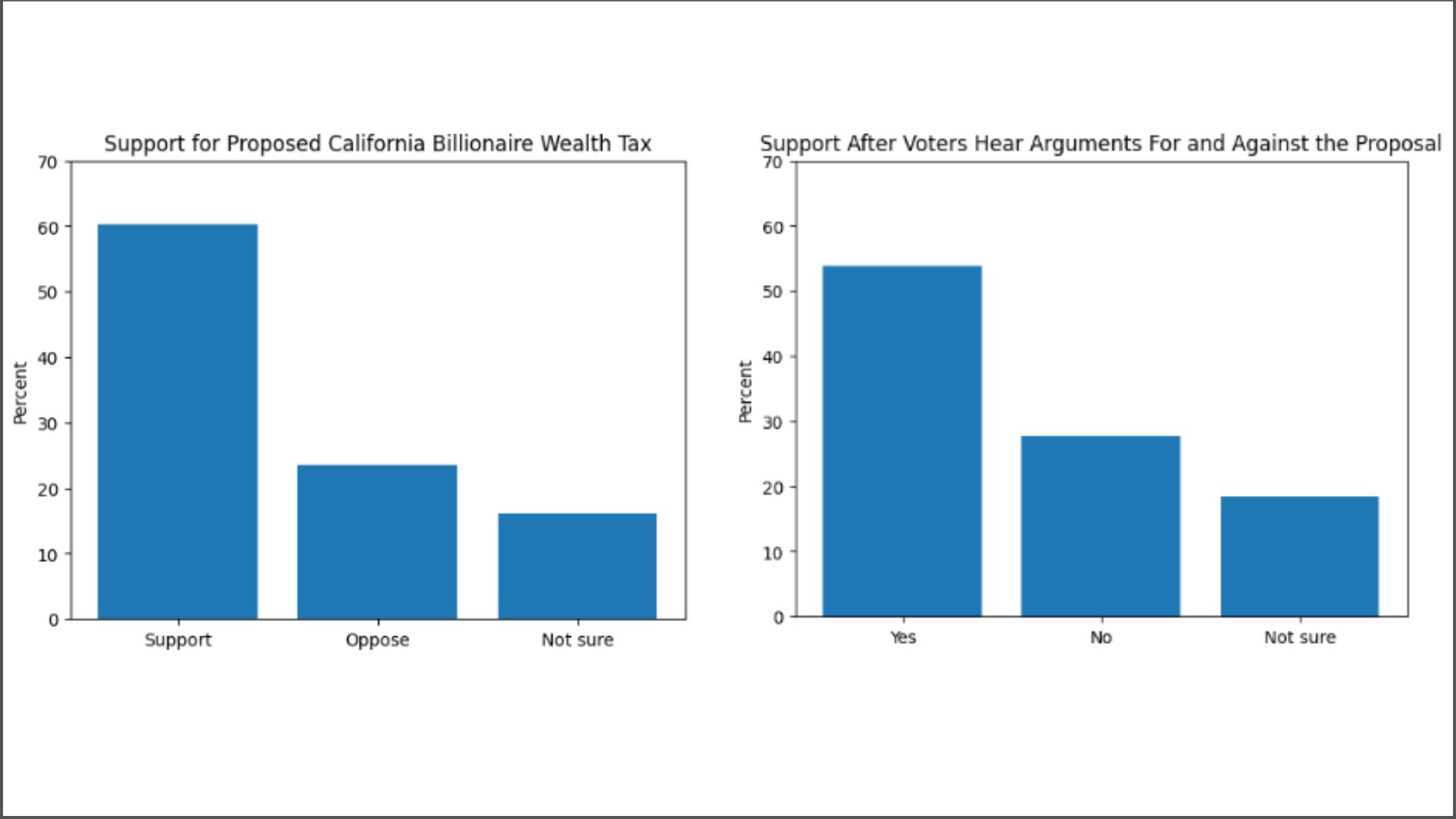
The Nestpoint survey of 907 likely California voters shows 60% support for the billionaire tax on an initial ballot test, placing the measure on a clear path to passage if the election were held today. Opposition stands at just 24%, with the remainder undecided. The measure starts at 60%, drops to 54% after sustained opposition messaging, and still passes because voters view the tax as fundamentally fair.
Even after voters were exposed to a full battery of economic and political arguments against the proposal, support remained above the threshold for passage — underscoring the resilience of the measure in a state increasingly driven by populist values.
“California voters are signaling something very clearly,” said John Thomas, veteran political strategist and Co-Founder and Managing Director of Nestpoint. “They are far more concerned with cost of living and public services than with the financial well-being of billionaires or the warnings coming from political and economic elites.”
Thomas stated, “California voters are voting with their values, not their calculators — and that’s exactly why this tax is likely to pass. The irony is that while voters don’t care if billionaires leave, capital absolutely will.”
“Voters aren’t bluffing — they’re fine taxing wealth. The people who should be nervous aren’t politicians, they’re the capital allocators quietly booking flights to Texas and Florida,” continued Thomas.
Economic and Political Warnings Fail to Resonate
Despite high-profile opposition, including from figures like Democratic Governor Gavin Newsom and leaders in tech, Nestpoint’s findings show that commonly cited arguments against the tax are failing to gain traction with voters:
- Only 52% agree the tax would cause entrepreneurs and jobs to leave the state
- Just 48% are persuaded by warnings of long-term revenue losses
- Concerns about harm to Silicon Valley resonate with only 42% of voters
“These are not knockout arguments,” Thomas said. “No single economic message is strong enough to stop this measure on its own.”
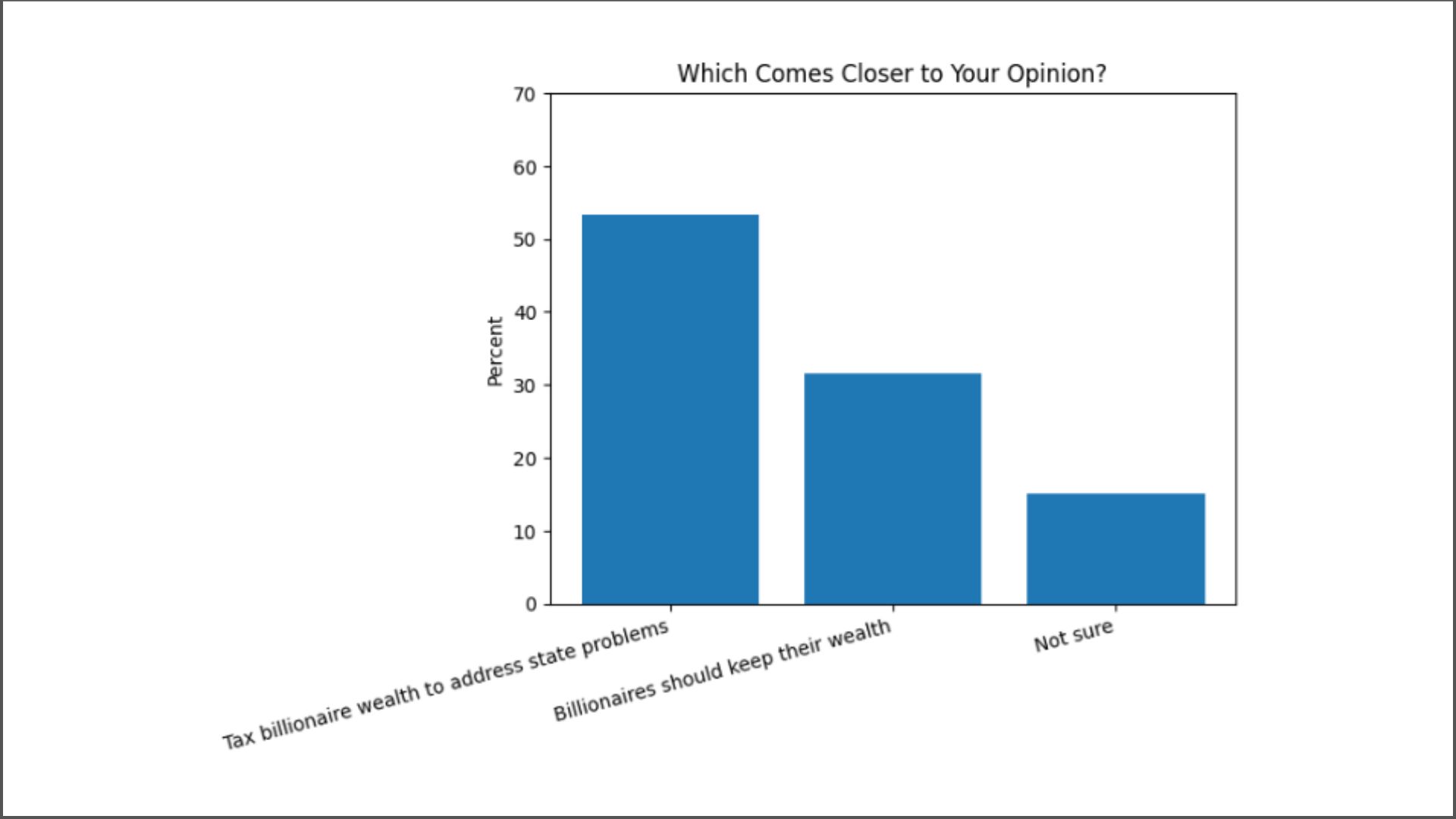
By contrast, messages framing the tax as a matter of fairness , asking billionaires to pay their share to fund healthcare, perform substantially better with voters.
Layered Messaging Can Move Voters at a High Price
The data show the measure begins with strong support, softens under sustained opposition messaging, but ultimately remains favored because a majority of voters believe taxing billionaire wealth is fundamentally fair
When voters were exposed to a series of opposition messages and asked to vote again on a fully informed ballot, support for the billionaire tax declined to 54%, a statistically meaningful shift that suggests a theoretical pathway to defeat.
But that pathway is narrow and expensive.
“What this poll shows is that persuasion here is cumulative,” Thomas said. “It’s not one message it’s repetition, saturation, and scale. And in California, that translates into a massive and potentially prohibitive media spend.”
Nestpoint estimates that replicating this effect statewide would likely require tens if not hundreds of millions of dollars, raising questions about whether wealthy individuals would invest to defeat the tax or simply choose to exit the state.
Capital Flight Likely if Measure Passes
If approved, Nestpoint expects the billionaire tax to accelerate the relocation of capital allocators and ultra-high-net-worth individuals to lower-tax states such as Texas and Florida, where tax policy is perceived as more stable and predictable.
“This vote is less about economics and more about values,” Thomas added. “California voters are comfortable taxing wealth. Capital, on the other hand, is highly mobile. Both realities can coexist.”
Bottom Line
Nestpoint’s polling indicates the California billionaire tax is currently favored to pass. While sustained opposition messaging can erode support at the margins, stopping the measure would require extraordinary financial resources and even then, success is far from guaranteed.
About Nestpoint
Nestpoint is a Dallas-based finance and government affairs firm that invests in and structures opportunities shaped by public policy and regulation. The firm brings together capital, political intelligence, and execution to navigate complex market environments.
Methodology: This survey was conducted statewide in California among 907 likely voters using an SMS/Text-to-Web survey methodology. The poll was fielded in January 2-12, 2026 and has a 95% confidence level with a ±3% margin of error. The sample was post-stratified and weighted to reflect likely general election turnout by age, gender, race, party affiliation, and media market (DMA).