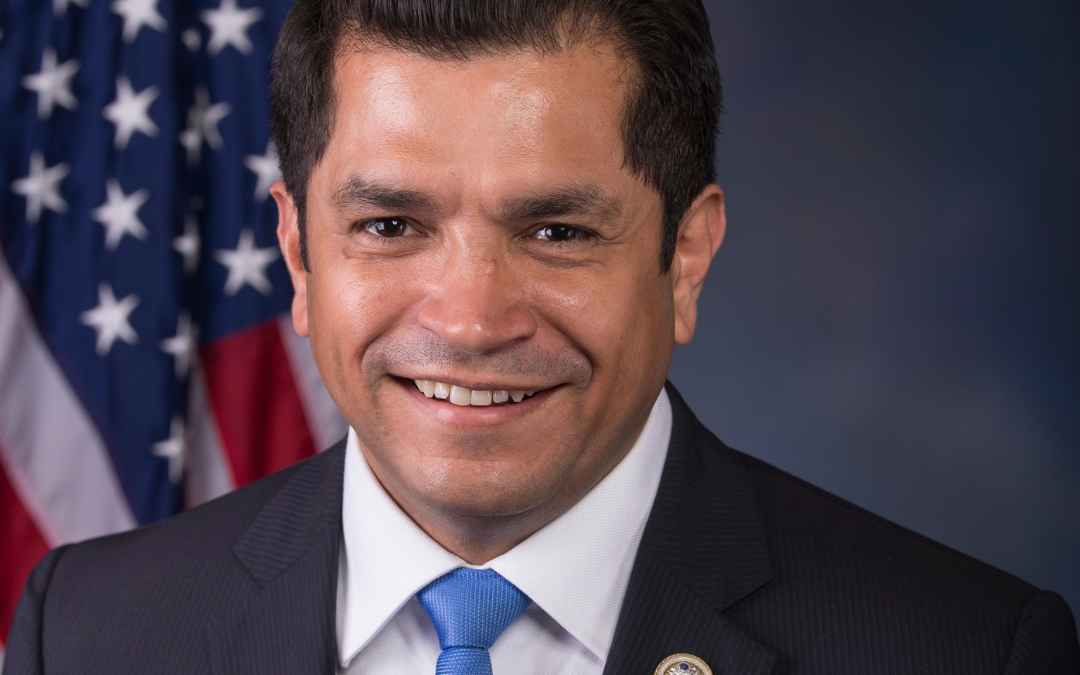
John Thomas Discusses Texas, California, and the New Rules of Campaign Politics on the Party Lines Podcast with Kalshi Politics

Washington, D.C., May 2026 — In a live election-night conversation on Party Lines Podcast with Kalshi Politics On Tour, hosted by Erin Maguire and Kurt Bardella, Nestpoint Managing Director John Thomas discussed a wide range of campaign dynamics, with particular focus on the Texas Senate runoff, the coming Paxton–Talarico general election battle, and the dysfunction shaping major California contests. Across those topics, one theme surfaced repeatedly: money still matters, but it becomes far less effective when it is disconnected from voter intensity, message discipline, and authenticity.
Texas runoff voters were already set
Thomas argued that President Trump’s endorsement in the Texas runoff likely mattered less than many assumed because the shape of the electorate had already been set. In his view, runoff voters skewed more MAGA, more conservative, and more ideologically committed than the broader electorate, which meant the race was already moving in Ken Paxton’s direction before Trump stepped in.
“I’m not sure it really mattered,” Thomas said of the endorsement, adding that Cornyn had effectively “peaked on primary night” while the runoff electorate naturally favored Paxton.
He also noted that the result served as a reminder that money does not always solve the problem campaigns want it to solve. Even after massive spending, there are races where the electorate is simply too hardened for money alone to change the fundamentals.
The Paxton–Talarico race will be a war of definition
Looking ahead to the general election, Thomas said the first task for Democrat James Talarico would be to define himself before Republicans define him. That means not only telling his own story, but also framing the stakes of the race immediately — before Paxton’s side can lock in its preferred narrative.
“The candidate has to define themselves first,” Thomas said. “Tallarico’s got to tell his story… and he’s got to frame this race.”
At the same time, Thomas made clear that Texas will require extraordinary resources. He said the race could demand at least another $200 million on top of what had already been spent, and that total spending could land somewhere in the $400 million range by November. In a state with 20 media markets, he argued, no serious candidate can afford to go dark.
Thomas also offered a less conventional national take on the race. While many Republicans worry Paxton will cost more to defend, he suggested the matchup could also drain small-dollar Democratic money nationwide into a race that may ultimately prove unwinnable for Democrats, pulling resources away from other competitive contests.
In California, authenticity still beats spending
On California politics, Thomas was blunt about the Democratic field. He said he was surprised that Democrats had not produced a stronger top-tier candidate, and argued that both the governor’s race and Los Angeles mayor’s race were showing the same underlying problem: voter dissatisfaction does not automatically translate into a credible alternative.
On Tom Steyer, Thomas said the campaign was running into the limits of paid media.
“Money is important, but not everything,” he said, arguing that Steyer’s nearly $200 million in spending had reached the point of diminishing returns and was ultimately reinforcing his core negative — that he is a billionaire who does not connect with ordinary voters.
Thomas made a similar point in Los Angeles, where he described Spencer Pratt’s rise less as a sign of conventional strength than as evidence of the electorate’s anger at Karen Bass. What gives Pratt traction, he argued, is not résumé strength but message authenticity.
“What’s working for Spencer is Spencer’s message,” Thomas said. “His message is authentic because everybody knows his house burned down.”
For John Thomas, the through-line in all of these races is that campaigns cannot spend their way around a credibility problem. They can amplify a message, saturate a market, and shape the battlefield, but they still have to fit the mood of the electorate and define the race before their opponents do. That applies in a Texas general election that may become one of the most expensive in the country, and it applies just as much in California, where dissatisfaction alone does not automatically produce a durable candidate.
The conversation originally aired on Party Lines Live on YouTube with Kalshi Politics Tour, hosted by Erin Maguire and Kurt Bardella, on May 26, 2026. You can listen to it here.
About Nestpoint
Nestpoint, with a global footprint and a formidable presence in Washington, D.C., is a leading government affairs, finance, and private equity firm. As a strategic ally, Nestpoint transforms challenges into opportunities through its expertise in policy influence, global networks, and financial innovation, delivering customized solutions for sustained client success. Nestpoint advises multibillion-dollar companies in the manufacturing, energy, and technology sectors as well as foreign nations.