BBC News Features John Thomas on U.S. Leverage in Iran Talks
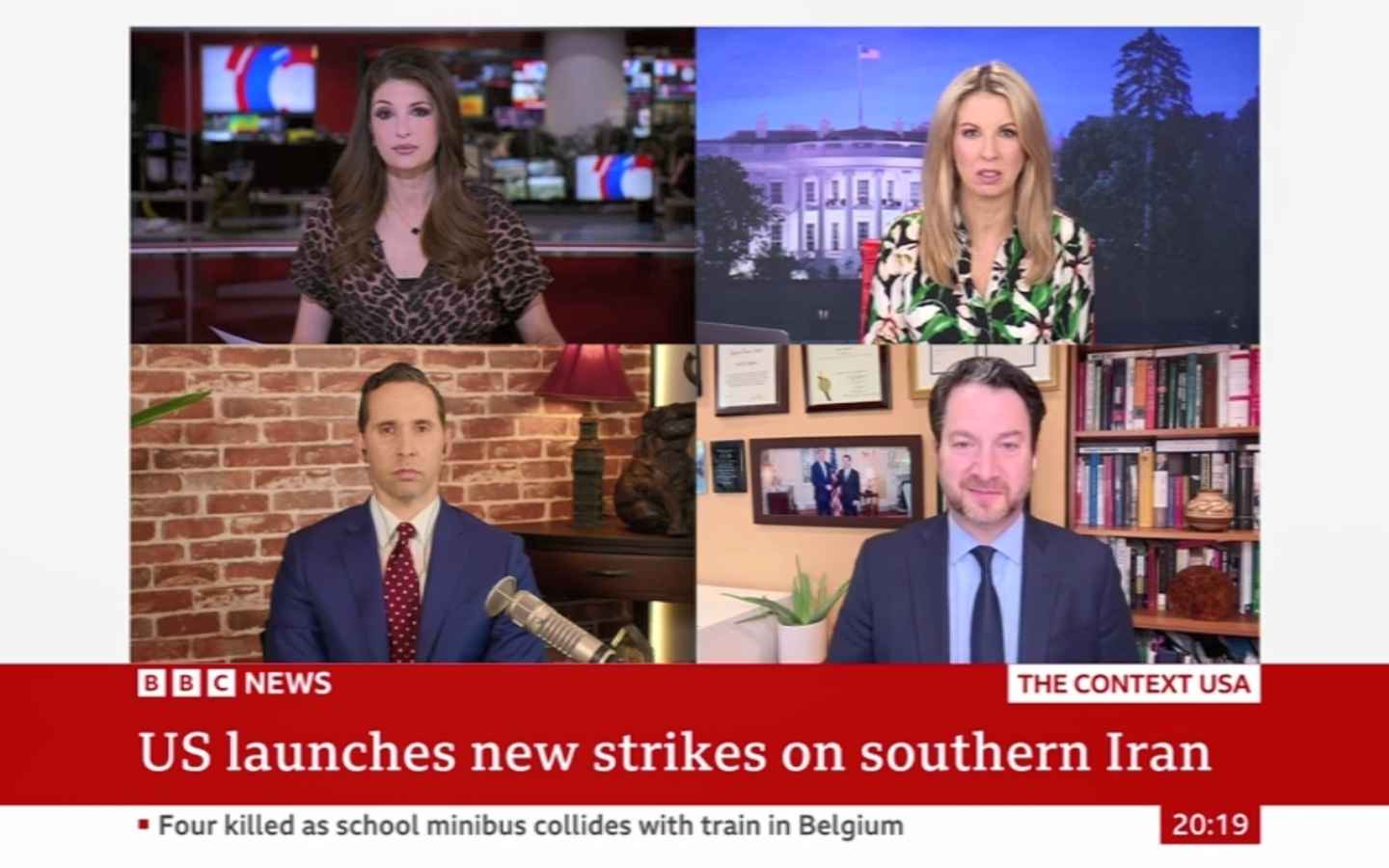
Washington, D.C., May 26, 2026 — In a recent appearance on BBC News’ Context USA, Nestpoint Managing Director John Thomas discussed the latest U.S. action in the war in Iran, the fragility of the ceasefire, and the broader question of whether Washington still holds enough leverage to force a workable agreement. The segment, hosted by Katrina Perry and Helena Humphrey, focused on new U.S. strikes, the Strait of Hormuz, and the prospects for a near-term diplomatic breakthrough.
Thomas argued that the latest pressure campaign should not be read as evidence of drift, but as part of the same coercive logic that helped bring Iran to the table in the first place.
“It was the U.S.’s pressure campaign that actually got Iran to come to the table to make a deal,” Thomas said. “So I think the continued pressure is favorable to get a resolution. But look, until this thing’s done, it’s not done.”
He also addressed President Trump’s effort to widen the diplomatic frame by tying a possible Iran agreement to broader regional goals, including a larger normalization push. Thomas suggested that Trump may be using that expansive posture less as a literal checklist than as a negotiating technique.
“The president’s perspective here is that he has the leverage, or as he likes to say, he has all the cards,” Thomas said. He added that Trump may be “using it as an anchoring technique where he throws in the kitchen sink for his whole wish list, only to come back to the core things that actually matter to the U.S. interest right now.”
On the central question of leverage, Thomas maintained that the United States remains in the stronger long-term position, even with the Strait of Hormuz still posing a serious energy and political challenge. He argued that Iran’s attempt to regain leverage through disruption in the Strait reflected weakness rather than strength.
“The Iranians were sneaking in mines in the Strait of Hormuz because they have no leverage,” Thomas said. “They have to recapture leverage in this process.” He added that while the U.S. is not immune from economic pain, “Iran is far worse off than we are,” and that “Iran has to resolve this if they want their society to continue.”
Thomas also pointed to non-military tools still available to Washington, including sanctions and pressure on neighboring states not to support Iran materially. In his view, the broader strategic question is not whether the current moment is delicate — it is — but whether Iran can afford to prolong it indefinitely. On that point, he was clear that the regime’s room to wait is limited.
For John Thomas, the significance of the moment is that the United States is still negotiating from strength, even in an unstable environment. His remarks suggest that the core test now is whether Washington can convert that leverage into a deal that protects U.S. interests without surrendering the pressure that created the opening in the first place.
The full segment originally aired on BBC News Context USA on May 26, 2026. You can watch it here.
About Nestpoint
Nestpoint, with a global footprint and a formidable presence in Washington, D.C., is a leading government affairs, finance, and private equity firm. As a strategic ally, Nestpoint transforms challenges into opportunities through its expertise in policy influence, global networks, and financial innovation, delivering customized solutions for sustained client success. Nestpoint advises multibillion-dollar companies in the manufacturing, energy, and technology sectors as well as foreign nations.